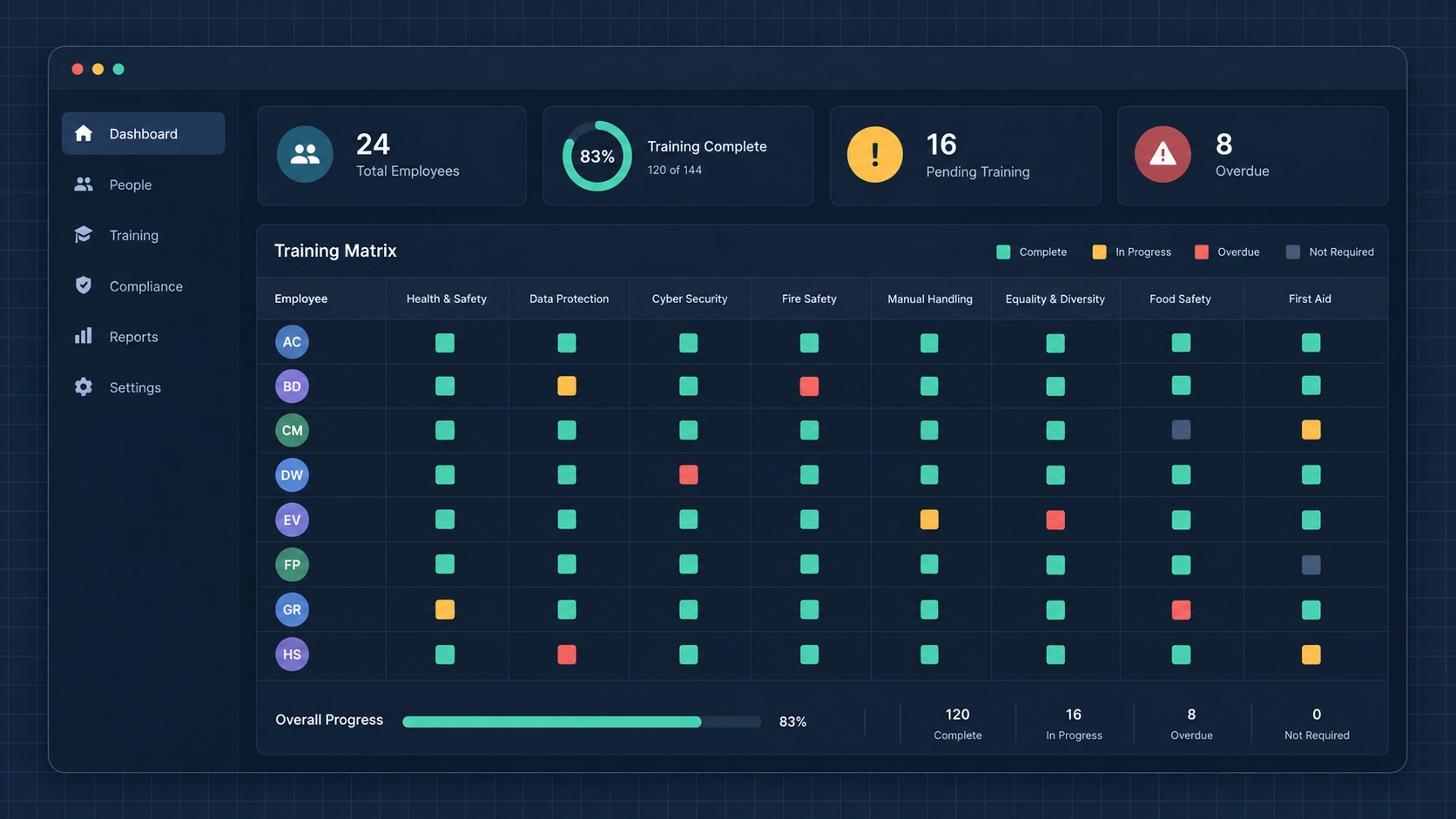
Learning how to design an effective staff training matrix begins with role requirements, not spreadsheet formatting. A useful matrix shows what each person needs, what they have completed and what action is due next. A staff training matrix generator UK organisations use should make that logic easier to maintain as teams grow.
Build the matrix step by step
- List roles and locations: Group employees by the work they actually perform.
- Map training requirements: Define mandatory, role-specific and optional learning for each group.
- Set status rules: Agree what counts as complete, due soon, overdue or not applicable.
- Record dates and evidence: Capture completion, expiry and supporting certificates consistently.
- Assign refreshers: Add renewal frequencies where policy, regulation or risk assessment requires them.
- Name action owners: Make responsibility clear for booking, completing and reviewing training.
- Review gaps: Use the matrix in supervision, workforce planning and internal audits.
Keep the matrix dependable
Avoid free-text course names and inconsistent date formats. Use agreed training categories, verify uploaded evidence and review requirements when roles, services or regulations change. Dashboards can improve visibility, but the underlying rules still need accountable owners.
Disclaimer: This article is general guidance, not legal advice. Confirm training requirements with the relevant regulator, awarding body or competent adviser.